
America’s Data-Center Boom Is Creating Unexpected Industrial Winners
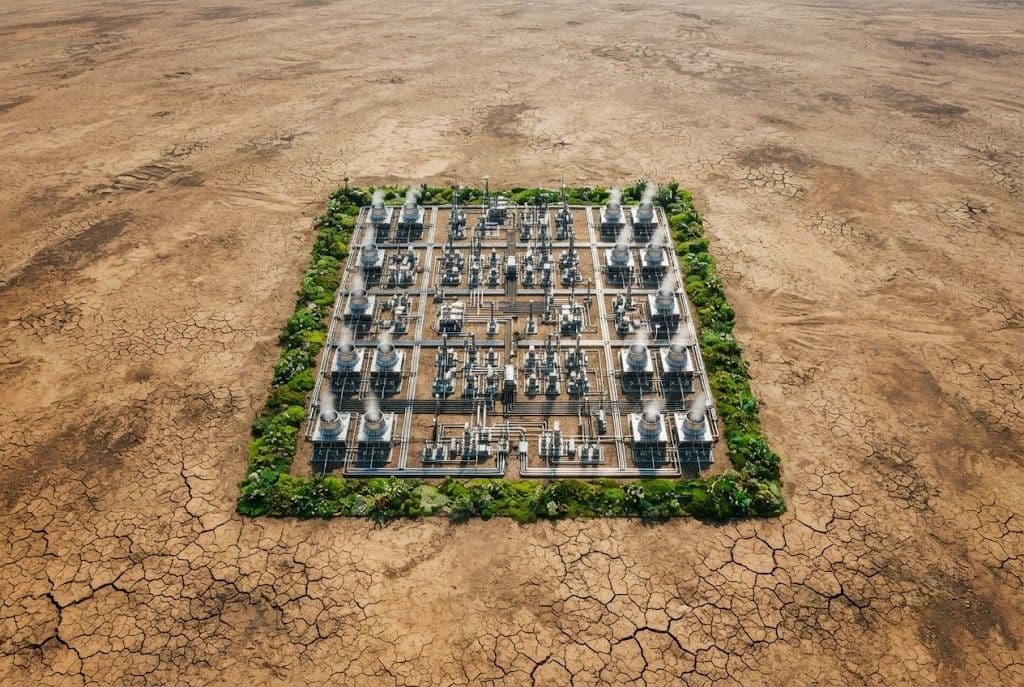
The biggest beneficiaries of America’s artificial-intelligence boom may not all be technology companies. As developers race to build data centers capable of handling increasingly demanding computing workloads, the spending is spreading into an older and less glamorous part of the economy: factories.
Manufacturers of generators, electrical equipment, cooling systems, construction machinery, bearings, cables and building components are finding themselves unusually close to the center of the AI investment cycle. The reason is straightforward. A data center is ultimately a physical facility that needs enormous amounts of electricity, cooling, steel, concrete and specialized equipment before it can produce a single unit of computing capacity.
That is creating an industrial ripple effect that is changing demand patterns across parts of American manufacturing.
The infrastructure behind the AI economy
The U.S. data-center construction market has expanded sharply. Private data-center construction spending reached $41.1 billion in 2025, up 32% from the previous year, according to the Conference Board. The organization identifies AI, cloud computing and broader digital demand as important drivers.
But construction spending captures only part of the economic activity. The equipment installed inside and around these facilities can be equally important.
Data centers need transformers to step electricity down to usable voltages, switchgear to distribute and protect electrical loads, backup generators to maintain reliability and increasingly sophisticated cooling systems to manage heat produced by dense computing equipment.
Those requirements create bottlenecks. Electrical equipment can take considerable time to manufacture, while grid connections and new generation can take even longer. That means developers may be willing to pay a premium for suppliers capable of delivering critical equipment on schedule.
The result is an unusual economic dynamic: companies that previously served relatively conventional industrial markets can suddenly find themselves supplying one of the fastest-growing areas of capital expenditure in the country.
The industrial winners
The effects are already visible among manufacturers.
Generac, better known for backup power systems for homes and businesses, has seen demand for data-center generators become a significant growth opportunity. Reuters reported that the company has a $1.6 billion backlog of data-center generator orders and plans to invest $250 million to expand production, potentially adding about 1,000 workers.
Siemens is another example of how the boom is extending into established industrial businesses. The company is investing in U.S. manufacturing capacity and securing longer-term customer agreements as demand for electrical infrastructure increases. Timken, meanwhile, is benefiting from demand for industrial bearings used in equipment associated with data-center construction and operation.
The pattern extends further down the supply chain. Cooling equipment, hoses, cables, prefabricated walls, construction machinery and other components can all become strategically important when developers are trying to bring large facilities online quickly.
This is an important distinction from a conventional technology boom. Demand does not stop at the semiconductor or software layer. It moves through physical supply chains, creating opportunities for companies that may have little connection to AI in the public imagination.
Why the economics are different
The mechanism behind the boom is essentially a race against time.
For a hyperscale data-center developer, a delayed component can delay an entire facility. If computing capacity is expected to generate substantial revenue, the cost of waiting can be greater than paying more for equipment or securing additional manufacturing capacity.
That gives suppliers with scarce products unusual pricing power.
It also encourages manufacturers to invest. A company that sees a sustained stream of orders can add production lines, expand factories or hire workers. Local economies can then benefit from higher industrial employment and additional spending by suppliers and workers.
The American Industrial Contractors Association notes that data-center construction creates direct demand for contractors and materials while also generating indirect demand for electrical components, cooling systems, engineering, transportation and other services.
Electricity infrastructure creates another layer of demand. The U.S. Energy Information Administration says electricity consumption has begun rising after years of relatively weak growth, with data centers among the drivers. Its 2026 analysis projects particularly strong load growth in regions such as Texas and the PJM grid area.
That makes the data-center boom partly an energy-infrastructure boom.
The opportunity comes with a risk
Industrial companies cannot assume today's orders will continue indefinitely.
The most obvious risk is overinvestment. Manufacturers expanding factories based on unusually strong AI-related demand could eventually face excess capacity if data-center construction slows, financing becomes more expensive or technology becomes substantially more efficient.
There is also a geographical constraint. Electricity availability increasingly influences where data centers can be built. If grid connections become difficult or expensive, projects may be delayed or relocated, affecting suppliers that have concentrated heavily around particular markets.
The financial risks are becoming harder to ignore. The Financial Times has reported growing concern over the scale of debt and capital being deployed into data-center construction, including questions about future demand, financing costs and the possibility of technological changes reducing the value of some facilities.
For industrial suppliers, this creates a delicate balancing act. The strongest companies may be those that use the current boom to expand capacity while avoiding investments that depend entirely on exceptionally high AI spending continuing indefinitely.
What comes next
The industrial effects of AI are likely to become more visible as the data-center buildout continues. The key question is whether today's infrastructure spending becomes a durable manufacturing cycle or a temporary surge concentrated around a small number of technology projects.
Much will depend on AI adoption itself. If businesses continue finding economically useful applications for increasingly capable systems, demand for computing capacity could support further investment. If productivity gains disappoint or financing becomes significantly more restrictive, construction could slow.
Energy availability will be equally important. EIA projections indicate that data centers will remain a significant source of electricity-demand growth, putting greater emphasis on generation, transmission and grid reliability.
For investors and manufacturers, therefore, the most interesting AI companies may increasingly include firms that never train a model. They are the businesses making the equipment that allows the models to operate.
America's AI boom is revealing an old economic principle in a new setting: major technological shifts rarely benefit only the companies that invent the technology. They also create demand for the infrastructure, machinery and materials required to turn an idea into physical economic activity.
This time, that ripple is running through America's factories.