
Beyond the Commuter: Ather Energy Enters the Electric Motorcycle Market
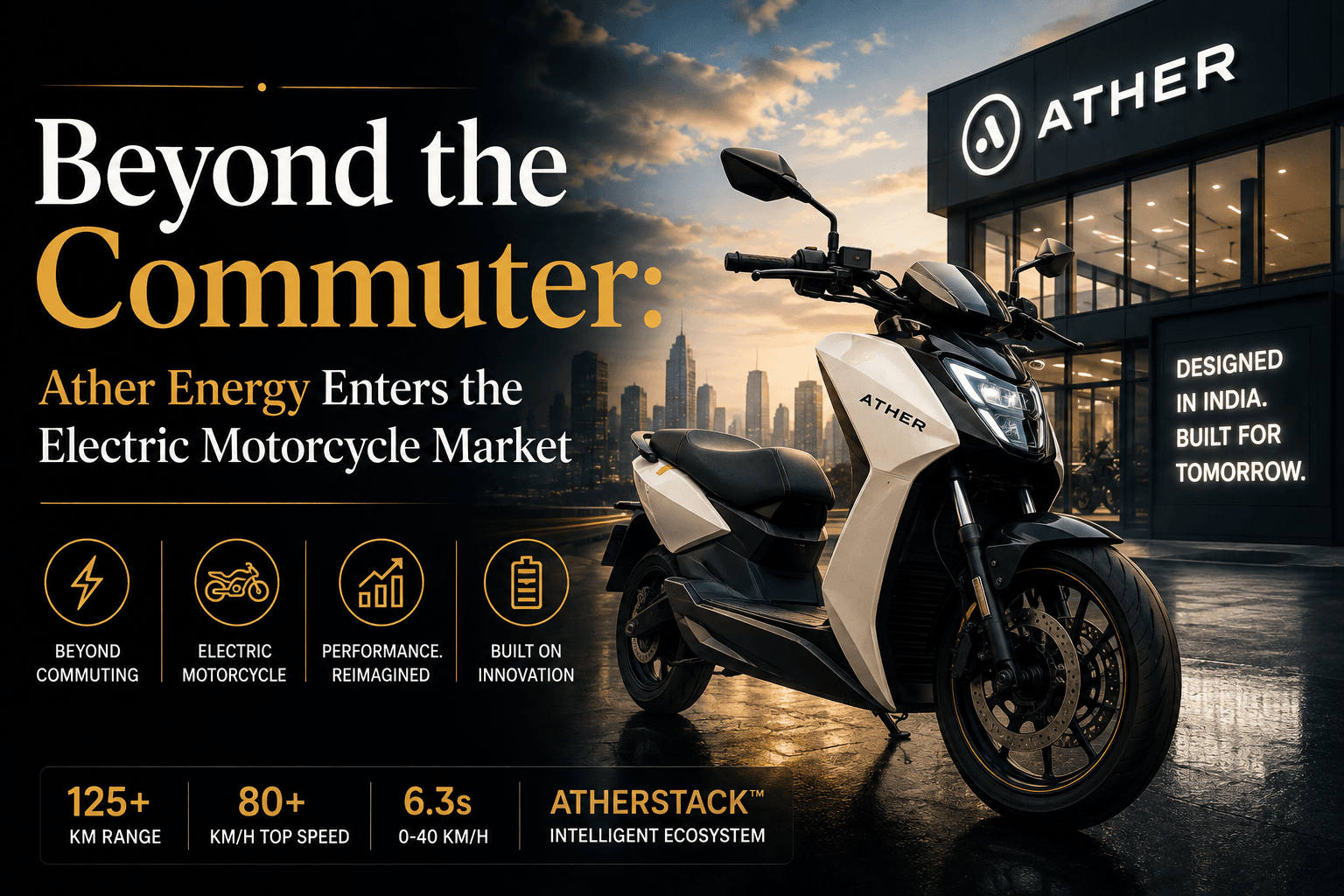
Ather Energy has formally expanded beyond its core electric scooter portfolio by unveiling its first performance electric motorcycle, named the Konarc, alongside a dedicated residential charging platform engineered specifically for high-density apartment complexes. The dual announcement represents a calculated strategic evolution for the Bengaluru-based manufacturer. Rather than competing solely on price within the saturated entry-level scooter market, Ather is targeting the performance motorcycle segment while directly confronting the physical infrastructure barrier that limits urban electric vehicle adoption.
Engineering the Two-Wheeler Transition
India’s two-wheeler market is among the largest in the world, but electrification has been heavily concentrated in the step-through scooter segment. Scooters offer predictable urban commuting duty cycles, low structural weight, and packaging space for under-seat battery packs. Motorcycles, which represent the overwhelming majority of total two-wheeler sales volume, present far more complex engineering challenges.
Motorcycles demand higher continuous power outputs, longer operating range, and distinct structural dynamics, all while maintaining strict thermal control over the battery pack without the protective bodywork of a scooter. With the Konarc, Ather introduces a proprietary high-voltage powertrain and structural battery pack designed to handle highway speeds and sustained torque demands without suffering severe thermal throttling.
Tackling the Apartment Charging Bottleneck
The simultaneous introduction of an apartment-focused charging ecosystem addresses the primary structural constraint on urban electric mobility: the lack of dedicated charging infrastructure in multi-unit residential buildings.
While public fast-charging networks are expanding along commercial corridors, daily electric vehicle use depends primarily on reliable overnight charging at home. In major urban centers, where millions of vehicle owners reside in multi-story apartment complexes without dedicated private electrical connections, installing personal wall chargers often involves complex legal, safety, and electrical metering negotiations with housing societies.
Ather’s integrated platform resolves this through:
Communal charging hubs with intelligent load-balancing software to prevent overloading residential transformers.
Automated billing systems that link energy consumption directly to individual user accounts rather than building common-area meters.
Compact, standardized charging hardware designed to fit confined parking spaces without requiring costly commercial electrical upgrades.
Market Implications and Competitive Pressures
This combined product and infrastructure rollout shifts competitive dynamics across the electric mobility sector. Established internal-combustion motorcycle manufacturers face a direct challenge in the premium commuter and performance categories, where brand loyalty is high and margins are substantially wider than in commuter scooters.
For rival electric vehicle startups, Ather’s proprietary charging infrastructure creates a powerful ecosystem lock-in. By solving the residential charging challenge, the company reduces purchase friction for apartment dwellers, establishing a customer acquisition channel that competitors lacking integrated infrastructure solutions cannot easily replicate.
Capital Requirements and Scaling Challenges
The critical variable in Ather’s strategy is capital intensity. Designing, tooling, and manufacturing a completely new motorcycle architecture requires extensive upfront capital expenditure. At the same time, deploying residential charging hardware requires sustained operational coordination with real estate developers, housing associations, and local power distribution utilities.
If consumer adoption of performance electric motorcycles lags due to high initial retail purchase prices, the capital deployed in dedicated manufacturing lines could weigh on operating margins. Furthermore, any reduction in government purchase subsidies across key state markets will test genuine consumer willingness to pay a premium for electric powertrains over proven internal-combustion alternatives.
The Maturation of Electric Two-Wheelers
Ather Energy’s latest strategy signals that the two-wheeler electrification market is moving past its early-adopter phase. Long-term market leadership will not be secured merely through aggressive retail discounting on entry-level models, but through complete engineering solutions that combine capable vehicle platforms with dependable, localized charging infrastructure. By targeting motorcycles and residential charging simultaneously, Ather is attempting to build the comprehensive ecosystem required for mainstream electric mobility.