
Voice Data Is Becoming the Next Intellectual-Property Battleground
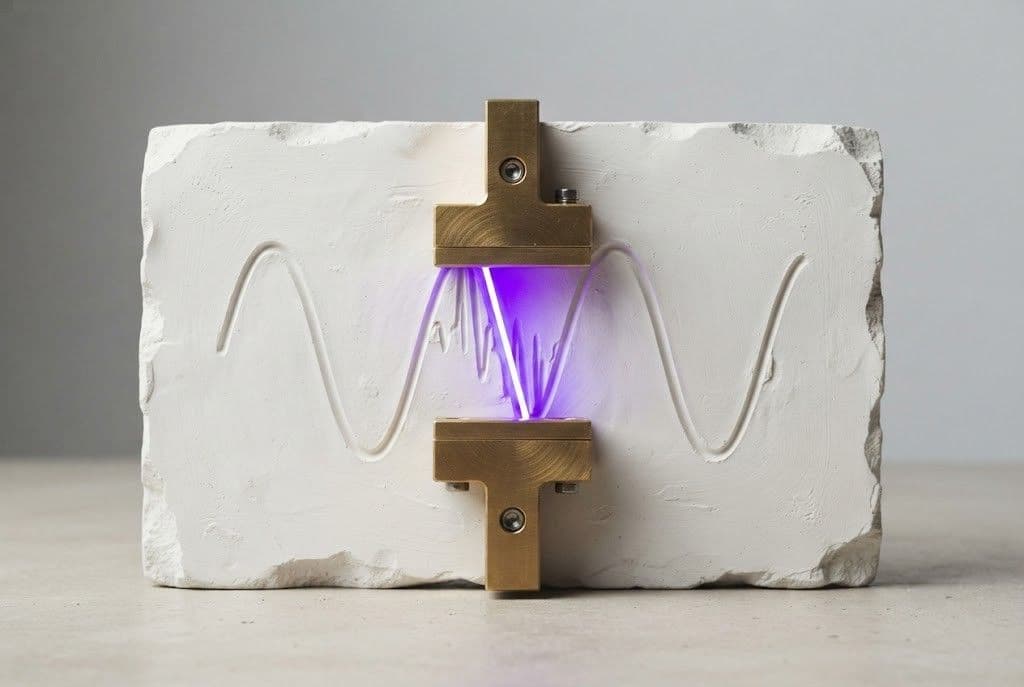
A human voice used to be difficult to reproduce convincingly. Artificial intelligence has changed that equation. With relatively small amounts of recorded speech, modern systems can increasingly generate synthetic voices that sound like particular people, raising a question that existing intellectual-property rules were not designed to answer: who controls the economic value of a voice once it can be captured, analyzed and reproduced as data?
The legal fight is now moving beyond celebrity impersonation. In August 2026, journalists, podcasters and audiobook narrators filed lawsuits in federal court in Chicago against major technology companies including Apple, Amazon, Meta, Microsoft, Nvidia and Samsung. The plaintiffs allege that recorded human voices were collected and used to train AI systems without the consent required under Illinois' Biometric Information Privacy Act, or BIPA. The companies dispute the claims and argue, among other things, that BIPA should not apply beyond Illinois. Importantly, the cases are not copyright lawsuits: they involve privacy, publicity, consumer-protection and related claims.
That distinction is central to the emerging legal landscape. The fight over voice is not simply a copyright dispute. It sits at the intersection of copyright, privacy, publicity rights, biometric-data regulation and contract law.
From recording to digital asset
Voice data has acquired economic value because AI systems can use speech recordings for several purposes. They can improve speech recognition, create synthetic voices, support translation and develop systems capable of producing natural-sounding dialogue.
For technology companies, large and diverse datasets can improve the performance of these systems. For broadcasters, audiobook narrators, musicians, actors and other professionals, however, recordings may represent something more personal: an identifiable aspect of their professional identity.
The difference matters because copyright generally protects creative works, while a person's voice is not automatically equivalent to a copyrighted work. A recording of a performance may carry copyright protection, but the characteristics that make an individual recognisable by voice can raise separate questions about personality and publicity rights.
The U.S. Copyright Office recognized this problem in its 2024 report on AI and digital replicas. It concluded that existing protections leave significant gaps and recommended a new federal law addressing the knowing distribution of unauthorized digital replicas of individuals. The report specifically covers realistic replicas of voices and appearances.
That recommendation reflects an important economic reality: a voice can function simultaneously as creative expression, biometric information and a commercial identifier.
The law is developing in several directions
Different jurisdictions are responding through different legal mechanisms.
Tennessee's ELVIS Act, enacted in 2024, expanded the state's right-of-publicity framework to give individuals a property right in their voices. The law allows those rights to be licensed and extends protection beyond traditional name-and-likeness rules.
India is also developing case law around unauthorized AI replication. The Bombay High Court has granted protection to singer Arijit Singh against unauthorized use of his voice and other personality attributes. In 2025, the court also granted relief to singer Asha Bhosle in a case involving AI tools allegedly used to reproduce her voice without authorization.
These cases do not establish a universal international rule. Instead, they illustrate how courts are using existing concepts of personality and publicity rights to address technology that did not exist when many of those laws were written.
The result is a fragmented legal environment in which the same AI application could face different obligations depending on where the data was collected, where the person lives and how the synthetic voice is used.
Consent is becoming an economic issue
For companies developing AI systems, the question of consent is not merely legal compliance. It could become a cost of doing business.
If voice datasets require licenses or individual permissions, companies may have to negotiate access to recordings, maintain detailed records of consent and establish systems for restricting particular voices. Those requirements could increase development costs and favor companies with enough capital to negotiate large-scale agreements.
For creators and performers, the same system could create a new source of income. A voice could become a licensable commercial asset, much like a name, image, song or performance.
That possibility is already influencing labor negotiations. SAG-AFTRA has made AI protections a major issue for performers and is supporting federal legislation that would establish a property right in an individual's voice and visual likeness.
The commercial question is therefore shifting from whether AI can imitate a voice to whether it can do so without paying for access to the underlying identity.
Data protection adds another layer
The Chicago litigation demonstrates why calling voice data simply “intellectual property” can be misleading.
Biometric privacy laws can impose obligations even when traditional copyright law does not. Illinois' BIPA, for example, has strict requirements concerning the collection and handling of biometric information. The current lawsuits argue that voice recordings can fall within those protections when used in AI development.
This creates a potentially important distinction for businesses. A company could theoretically avoid copying a copyrighted performance while still facing liability over how it obtained or processed the voice data.
That makes data provenance increasingly important. Companies building AI systems may need to know not just what material they possess, but where it came from, what permissions accompanied it and what downstream uses were authorized.
The market could move toward licensed voices
The most likely long-term effect may be the emergence of a more formal market for voice rights.
Technology companies could license voices directly from performers. Actors and narrators could negotiate contracts specifying where synthetic versions can be used, for how long and for what purposes. Platforms could introduce technical systems that authenticate authorized digital replicas and restrict unauthorized cloning.
Such arrangements would create new commercial opportunities but also introduce transaction costs. Smaller companies might struggle to negotiate individually with thousands of rights holders, potentially encouraging collective licensing or standardized contracts.
Technology could also influence the balance. Better detection and watermarking systems may make unauthorized synthetic voices easier to identify, while increasingly capable models could make imitation harder to distinguish from genuine recordings.
The policy challenge is to protect individuals without making legitimate applications of synthetic speech unnecessarily difficult.
A new definition of ownership
The future legal framework remains unsettled. The U.S. Copyright Office has recommended federal action on digital replicas, while Congress has considered legislation such as the NO FAKES Act. State laws continue to develop, and courts are beginning to test existing privacy and personality-rights doctrines against AI systems.
The outcome will matter beyond entertainment.
Voice technology is being incorporated into customer service, accessibility tools, education, translation, gaming and other commercial applications. A broad requirement for consent could increase costs but provide clearer rights. A fragmented system could preserve flexibility while creating uncertainty for companies operating across jurisdictions.
The deeper issue is that AI is turning characteristics once regarded primarily as personal into potentially valuable digital assets.
A voice can now be recorded once, converted into data and reproduced at scale. That changes the economics of identity. The legal system is being asked to determine whether that transformation creates a new property right, activates existing protections or requires a mixture of both.
The answer will shape not only who is allowed to sound like whom, but also who captures the economic value of one of the most recognisable forms of human identity.