
Why Honda May Rethink Its Next North American Factory
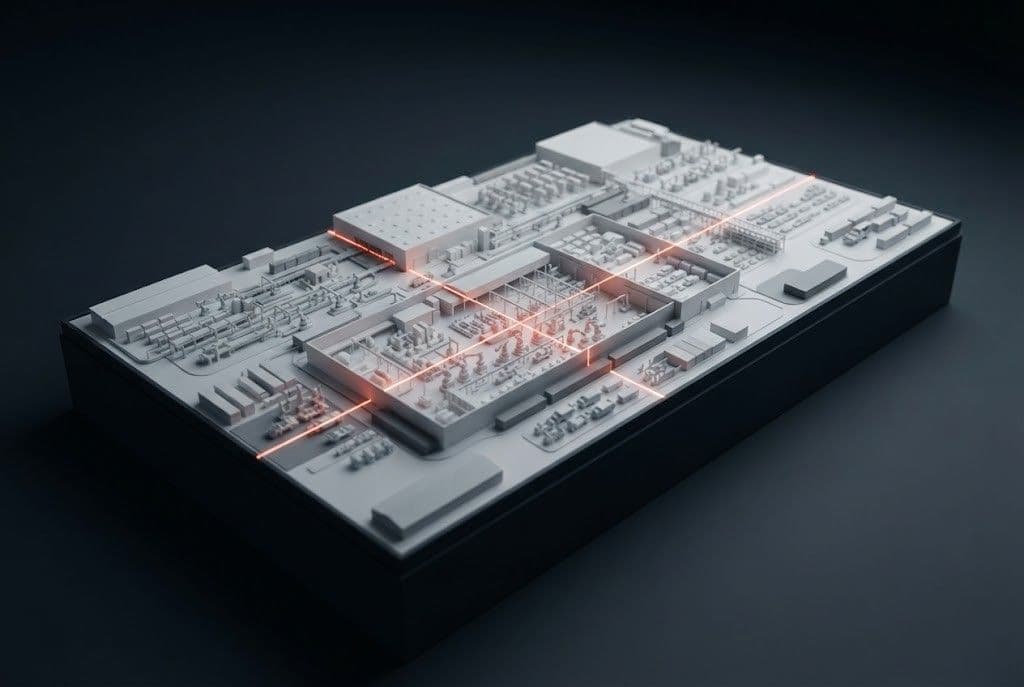
Honda’s next North American factory may be a decision about trade policy as much as manufacturing capacity.
The Japanese automaker has indicated that it is considering additional assembly capacity in North America as its existing plants approach their limits. But Honda Executive Vice President Noriya Kaihara said on August 25 that a new plant, potentially targeted for operation around 2030, would be difficult to justify without greater certainty over the future of the United States-Mexico-Canada Agreement, or USMCA. A decision may be required within the next one to two years.
That makes the proposed factory an unusually revealing test of the economics of North American manufacturing. Honda needs to decide not only where demand will be, but also whether the rules governing the movement of vehicles and components across the continent will remain stable enough to support a multibillion-dollar investment.
A capacity problem meets a strategic reset
Honda already has a substantial production network across the United States, Canada and Mexico. Its existing facilities provide flexibility to move production between models and locations, but adding a completely new assembly plant would require a long-term commitment to land, equipment, workers, suppliers and logistics.
The timing is complicated by Honda’s change in product strategy.
Earlier in the decade, Honda was preparing for a much more aggressive transition toward electric vehicles. In April 2024, it announced plans for an approximately C$15 billion comprehensive EV value chain in Ontario, including an EV plant and battery-related facilities. The company subsequently postponed the project and in May 2026 indefinitely suspended it, citing changing market conditions, customer demand and a revised strategy.
Honda is now putting greater emphasis on hybrids. The company plans to launch 15 next-generation hybrid models globally by the end of the fiscal year ending March 2030, with North America identified as a priority market. It is also targeting roughly a 20% improvement in production efficiency over the next five years.
That changes the factory calculation. A plant designed around a single expected technology cycle is riskier when consumer demand is shifting between gasoline, hybrid and electric powertrains.
Why USMCA matters
North American car manufacturing is unusually integrated. A vehicle can be assembled in one country while relying on engines, batteries, electronics, steel and other components produced elsewhere on the continent.
The USMCA provides the framework that makes much of this integration commercially workable. If the agreement becomes less predictable, manufacturers face a difficult choice: absorb higher trade costs, redesign supply chains, or place more production inside the United States.
That uncertainty has become more significant after the Trump administration threatened a 50% tariff on Canadian-made cars, trucks and auto parts beginning January 1, 2027, following the breakdown of recent U.S.-Canada negotiations. Canada has announced retaliatory measures.
For Honda, this is not simply a political issue. It affects the expected return on a factory.
An assembly plant is a long-lived asset. Once construction begins, the company cannot easily relocate it if tariffs change, a vehicle platform underperforms or consumer preferences move in another direction. Trade stability therefore has a direct financial value: it reduces the uncertainty surrounding future production costs and market access.
The location question
Honda could theoretically respond to changing trade conditions by expanding existing U.S. facilities rather than building an entirely new plant. The company has already demonstrated a willingness to adjust production within its network.
Honda has shifted production of its next-generation Civic to Indiana from Mexico, a move the White House says will secure approximately 210,000 units of annual U.S. output.
Existing factories also have an advantage: much of the infrastructure, workforce and supplier ecosystem is already in place. Expanding or retooling an established facility can therefore be less risky than constructing a new operation from scratch.
Honda has said it intends to strengthen its manufacturing structure and improve production efficiency, while increasing local content for motor and inverter assemblies and components as it expands hybrid production in North America. The company says the move should reduce supply risks and mitigate tariff exposure.
The implication is important. The next phase of North American manufacturing may not necessarily be about building the largest possible number of new factories. It may be about extracting more capacity and flexibility from assets companies already own.
Who bears the cost of uncertainty?
For Honda, delaying a factory preserves capital and gives management more information about demand, trade rules and technology. But waiting also carries a cost.
If North American demand continues growing and existing facilities become constrained, insufficient capacity could limit sales or force Honda to rely more heavily on imports. Competitors that invest earlier could gain access to customers while Honda waits.
Governments face a different incentive. A new factory can create construction activity, permanent employment and demand for local suppliers. That gives states, provinces and municipalities a reason to compete for investment through infrastructure, incentives and favourable business conditions.
Workers and suppliers also have an interest in expansion, but the benefits are not guaranteed to be evenly distributed. A highly automated plant may generate significant output without producing the number of jobs associated with older manufacturing facilities. Suppliers, meanwhile, benefit most when production volumes remain high enough to justify local operations.
Consumers ultimately face the price consequences. If tariffs or fragmented supply chains increase manufacturing costs, some of those costs can reach vehicle prices. If investment improves productivity and reduces logistics risk, the effect could move in the opposite direction.
The decision ahead
Honda’s eventual choice will depend on several variables moving together: North American vehicle demand, the relative popularity of hybrids and EVs, factory utilization, tariff policy, USMCA negotiations, labour costs and the economics of expanding existing facilities.
The most straightforward outcome would be a new factory if Honda concludes that long-term demand will exceed its current capacity and that production inside the United States offers a sufficiently reliable cost advantage.
Another possibility is a more incremental strategy: increase output at existing plants, move selected models between facilities and postpone a greenfield investment until demand and trade rules become clearer.
The bigger lesson is that industrial investment is becoming less about finding the cheapest location and more about managing uncertainty. Honda’s decision shows how a factory that may operate for decades can be shaped by policies and consumer preferences that can change within a few years.
For North America, that makes Honda’s calculation more than a corporate expansion decision. It is a measure of whether the continent’s integrated manufacturing model can remain efficient while companies simultaneously navigate shifting technology, trade rules and consumer demand.