
Why U.S. Manufacturers Are Expanding Production in the South
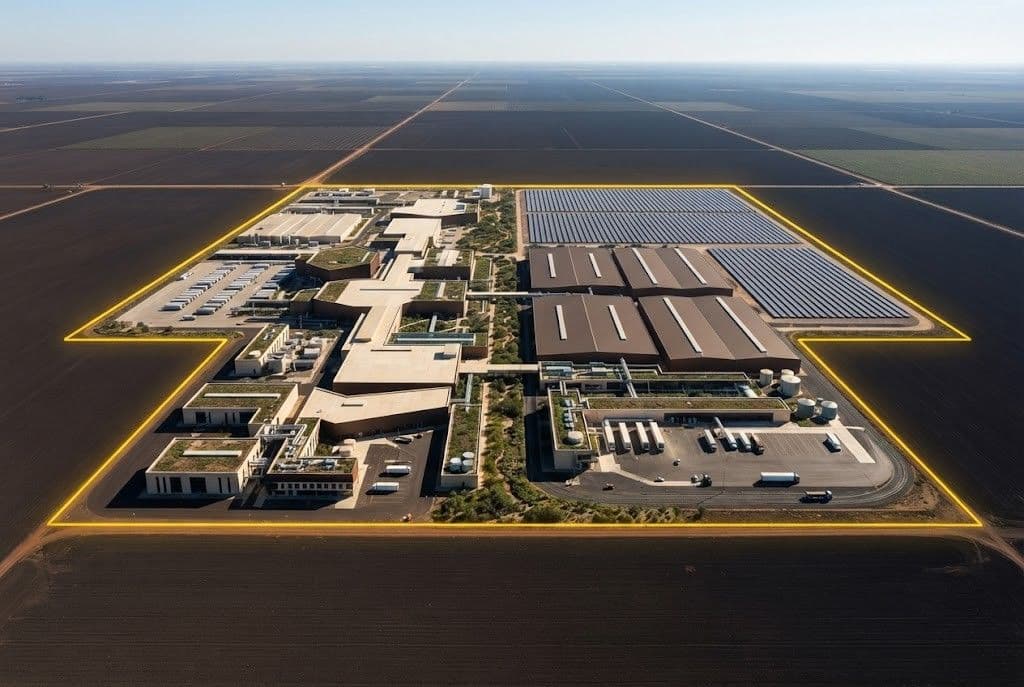
The geography of American manufacturing is changing, and the South is increasingly at the centre of that shift.
From Texas and Tennessee to Georgia, Alabama and the Carolinas, manufacturers are expanding production in regions that were once less associated with large-scale industrial activity than the Midwest. The movement is not the result of a single policy or a single cost advantage. It reflects a combination of land availability, infrastructure, labour markets, energy costs, business investment and the gradual development of industrial ecosystems.
Recent investment illustrates the trend. General Motors announced a $275 million investment at its Spring Hill, Tennessee, complex in June 2026, while Toyota has outlined additional investments across several Southern states. New projects are also extending beyond traditional automotive manufacturing into power equipment and other advanced industrial activities. (news.gm.com)
The question is whether the South can turn a series of factory announcements into a durable manufacturing ecosystem.
The advantages are cumulative
Manufacturing companies rarely choose a location on the basis of wages alone.
A factory requires land, electricity, water, roads, rail connections, logistics services and access to a sufficiently large workforce. It also benefits from nearby suppliers and from other manufacturers with which it can share infrastructure and labour pools.
Many Southern states have spent decades developing those foundations.
The result is a cumulative advantage. Once a major manufacturer establishes a plant, suppliers have an incentive to locate nearby. Technical colleges adapt training programmes to local demand. Logistics providers expand. Other manufacturers become more comfortable with the region because the industrial infrastructure is already there.
This helps explain why a location that may once have been considered peripheral can become attractive to the next generation of industrial investors.
The Federal Reserve's research on foreign direct investment also shows that manufacturing investment is increasingly distributed according to industry-specific factors rather than following a single national pattern. In 2025, Texas received $21.5 billion in first-year expenditures associated with new foreign direct investment, while Louisiana recorded the largest greenfield investment among U.S. states at $3 billion. (federalreserve.gov)
Land and infrastructure matter
One of the South's clearest advantages is physical space.
Large manufacturing facilities require substantial sites, and expansion is easier when industrial land is available at a reasonable cost. Southern metropolitan areas have generally had more room for outward development than many older industrial regions in the Northeast and Midwest.
But land alone is insufficient.
Industrial projects can take years to develop if roads, power connections, water systems or industrial parks are not ready. Southern states and local development authorities have therefore invested heavily in site preparation and infrastructure intended to make large projects easier to launch.
A recent example is Industrial Electric Manufacturing's planned $200 million facility in San Antonio. The company cited infrastructure, workforce availability and local economic-development support among the reasons for choosing the site. The project is expected to produce power-distribution equipment for data centres, healthcare, energy and manufacturing. (axios.com)
This illustrates a broader shift: manufacturing locations increasingly compete on the readiness of their entire industrial platform, not simply on the price of a parcel of land.
The labour advantage is becoming more complicated
Labour costs have historically been an important consideration in the South, but the region's manufacturing appeal cannot be reduced to lower wages.
A more important advantage may be the availability of workers in regions that have experienced substantial population and employment growth. Companies can recruit from expanding metropolitan areas rather than relying entirely on older industrial labour markets.
Yet this advantage has limits.
As more factories arrive, manufacturers begin competing for the same technicians, engineers and skilled production workers. The result can be rising wages and recruitment costs.
The workforce issue may become especially significant as manufacturing becomes more automated. Modern plants require fewer workers for some routine tasks but more people with specialised technical skills. A region can therefore have a large labour force and still experience a shortage of workers qualified for particular jobs.
The South's future manufacturing competitiveness will depend partly on whether community colleges, technical schools and employers can expand training quickly enough to match investment.
Automotive manufacturing created the foundation
The automotive industry has been one of the most important anchors of Southern manufacturing.
Foreign automakers established major operations across the region over several decades, followed by suppliers and related industries. Hyundai, Toyota, Honda, Mercedes-Benz, BMW and others helped create a network of production facilities extending across multiple Southern states.
That network now provides an advantage for newer investments.
A manufacturer entering the region does not necessarily need to build an industrial ecosystem from scratch. Suppliers, logistics providers and workers with relevant experience may already be available.
The effect can be self-reinforcing. More production creates more suppliers, while more suppliers make the region more attractive to additional producers.
The recent expansion of Hyundai's U.S. manufacturing footprint demonstrates how this ecosystem can evolve. Its new Georgia manufacturing complex is adding capacity while existing Southern operations continue to support the company's broader U.S. production strategy. (businessinsider.com)
Energy and industrial demand are adding another layer
The South is also benefiting from a wider investment cycle in electricity infrastructure, data centres and advanced manufacturing.
Texas and other Southern states have become major destinations for data-centre investment, creating demand for electrical equipment, cooling systems, construction materials and industrial services.
That demand can create opportunities for manufacturers located close to the customers they serve. A producer of electrical equipment, for example, may value proximity to rapidly expanding data-centre and energy markets more than access to an established manufacturing cluster elsewhere.
This is one reason the current industrial migration is broader than the traditional "auto plant moves South" narrative.
The costs of success
The Southern manufacturing model is not without vulnerabilities.
Rapid industrial growth can strain roads, power systems, water supplies and housing markets. Communities may face higher infrastructure costs as they accommodate new factories and workers.
Local governments also compete aggressively for investment, sometimes offering tax incentives, grants or infrastructure support. Such incentives can make projects viable, but they also create questions about how much public expenditure is required to attract private capital and whether the long-term economic benefits justify the cost.
The labour market presents another constraint. If too many manufacturers arrive simultaneously, companies may find that the region's initial cost advantage narrows as wages, land prices and competition for workers rise.
That does not necessarily undermine the South's appeal. It means the advantage becomes more dependent on productivity, infrastructure quality and workforce development.
What comes next
The most plausible future is not a complete migration of American manufacturing to the South. The Midwest will remain an important industrial centre, particularly where existing supplier networks, skilled labour and infrastructure provide strong advantages.
Instead, the United States is developing a more geographically distributed manufacturing system.
Southern states are well positioned to capture additional investment if they can maintain reliable infrastructure, expand skilled-worker pipelines and manage the pressure created by rapid growth. Companies, meanwhile, will continue comparing the total cost of production rather than simply searching for the lowest wages or the largest incentives.
The significance of the Southern manufacturing boom is therefore larger than the number of factories being announced.
It reflects a change in how companies evaluate industrial location. Land, labour and taxes still matter, but so do electricity, supply-chain resilience, customer proximity, infrastructure readiness and the ability to build a workforce around new technology.
The South's advantage will ultimately depend on whether those factors continue to reinforce one another. If they do, the region could become not merely a destination for factories but one of the principal industrial platforms supporting America's next manufacturing cycle.